
Cutting post-harvest loss in a nutshell
Fueled by nutshell waste, new dryers help reduce loss of precious Georgian hazelnuts
Shete Kemoklidze has been around hazelnuts for most of his 31 years.
“I grew up with hazelnuts,” he says. “I was 13 when my father was planting this orchard. In winter he would get me up at five in the morning, and we did all of it together.”
Thirteen of his 17 hectares in the Kvareli municipality of the Kakheti region in eastern Georgia are in full production, four are newly planted, and five more are on the way. He grows the local Anakliuri variety and harvests at least three tonnes of dried nuts from every hectare.
Four years ago, something unprecedented happened: a reseller sent his hazelnuts back. “Aflatoxin turned up in my hazelnuts,” he says.
Aflatoxin is a type of toxin that develops from fungal infections when hazelnuts sit damp – on the ground, in the husk, or in storage. “If aflatoxin is detected in a batch, the nuts are no longer fit for human consumption,” Shete says. “The product has to be thrown away and destroyed. I lost around USD 20 000.”
When a crop is grown, treated, harvested and paid for, then thrown out before anyone eats it, the loss is painful. It is not only an economic loss and an impact on the farmer’s livelihood, but also the loss of all the natural and monetary resources that went into making a product that cannot be used.
Today he is far better armed against the risk of food loss and aflatoxin that once cost him a harvest. Through the European Neighbourhood Programme for Agriculture and Rural Development (ENPARD IV), funded by the European Union and the Government of Sweden and implemented by the Food and Agriculture Organization of the United Nations (FAO), Shete completed food safety training and received a matching grant to purchase a hazelnut dryer. The knowledge acquired and the machine now ensure that his crop won’t be wasted.
“It was directly caused by drying hazelnuts incorrectly,” says Shete.
Gold does grow on trees.
A lost harvest hurts even more when contrasted with what a good one is worth – and in Georgia, hazelnuts are worth a great deal. Shete says, “Hazelnut is like oil, the way oil is like black gold.”
Georgia exported over 18,100 tonnes of hazelnuts in 2025, valued at USD 165.1 Million. Hazelnuts and other nuts are the country’s second largest agricultural export commodity (Geostat, External Merchandise Trade of Georgia 2025). The European Union is the largest market, accounting for 65% of export value that year.
Meanwhile, aflatoxin is a recognised risk across hazelnut-producing countries. To protect consumers, from liver toxicity, the European Union monitors imports closely, and in 2025 its Rapid Alert System for Food and Feed (RASFF) recorded 17 border rejections of Georgian hazelnuts due to aflatoxin contamination. This context is a major reason orchard and post-harvest management receive so much attention in the sector.
Unlike a visible defect, aflatoxin is hard to detect, which is why proper drying carries the most weight.
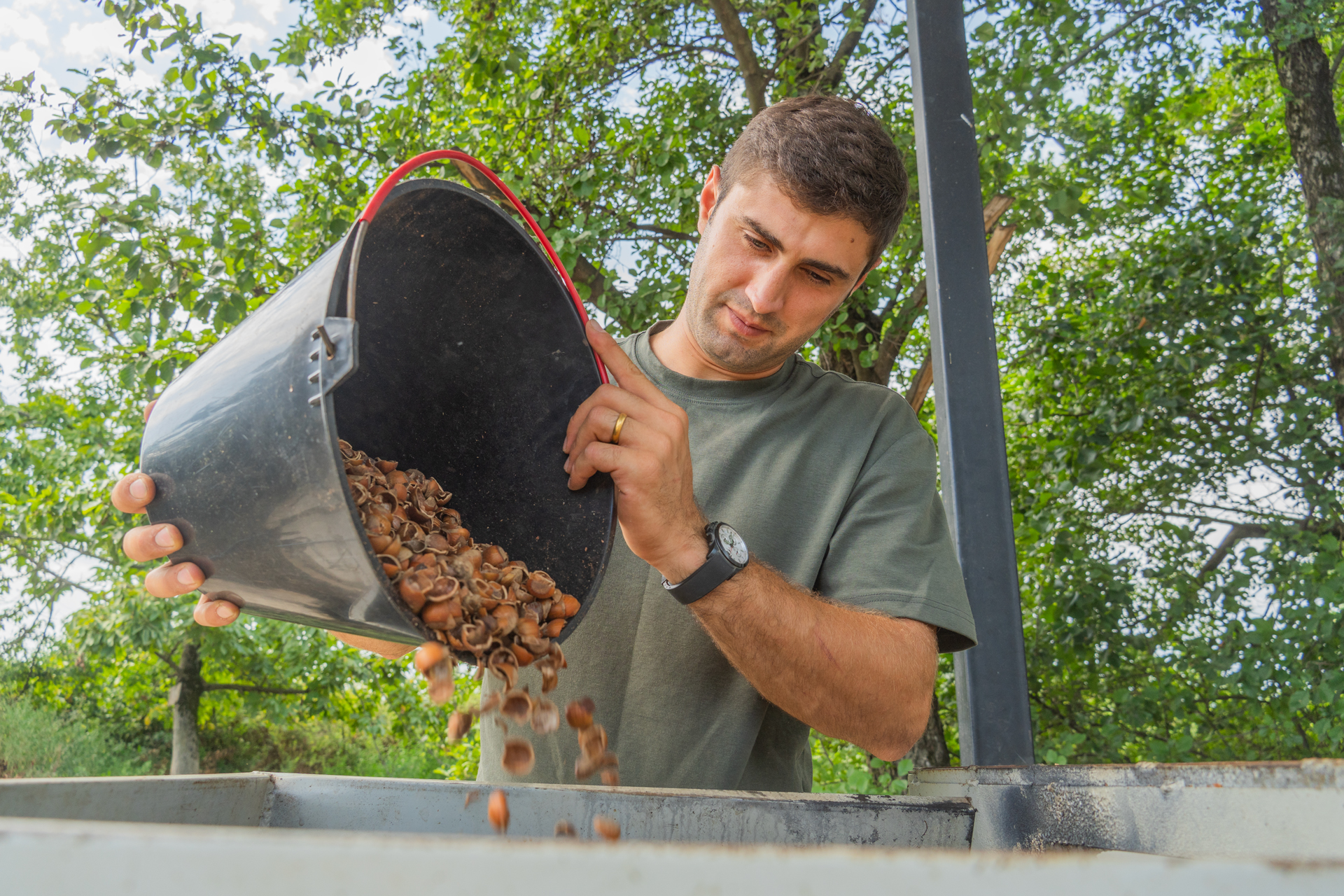
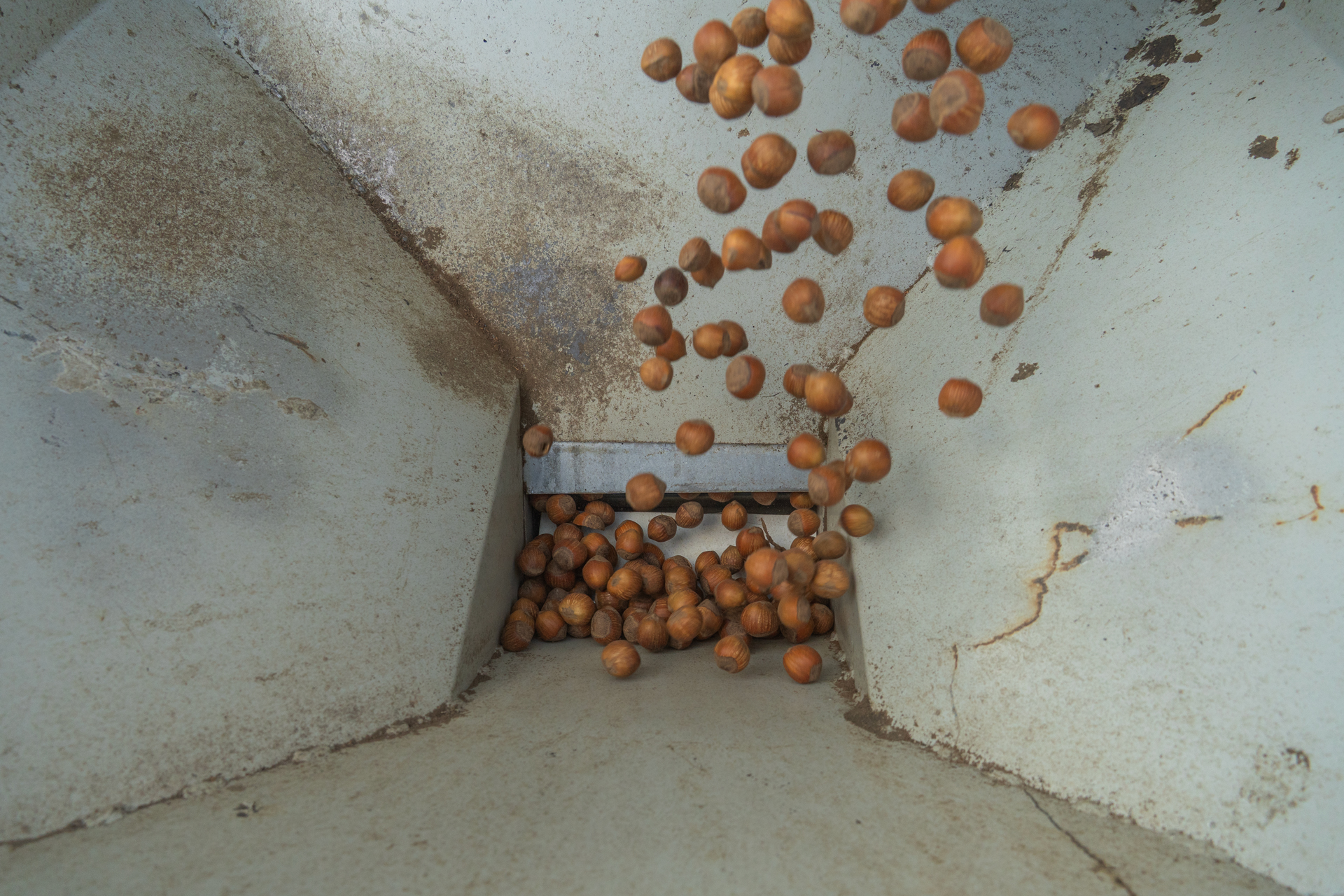
When a crop goes all the way through to harvest and is then thrown out before anyone eats it, the loss is painful, not only the economic loss but also the loss of all the natural and monetary resources that have gone into making it. © FAO / Guram Saqvarelidze
A dryer fed on shells
Shete was already attending FAO’s food safety training when he learned about the matching grant scheme for Georgian hazelnut producers.
With the matching grant, Shere bought a state-of-the-art dryer and a vertical elevator to feed hazelnuts to the dryer.
The innovative part is that the furnace now runs on hazelnut shells, generally considered only a waste product. “The waste is now our main drying source,” he says. “We have the circle closed – harvesting, processing, cracking, and then the shell becomes the driving force.”
Similarly, they press broken kernels for oil; they mill the residue into flour.
“Not one part of it is thrown away,” Shete says. Next on his list is a mulcher to put pruning residues back into the soil.
Helping hand for the neighbours
Shete and other grant recipients are drying hazelnuts for their neighbours too, hundreds of tons of nuts that would once have sat in a heap drying in accordance with the weather.
“Now even farmers with three or five tons are asking to dry their hazelnuts, so the harvest is secured quickly, and they are not left exposed to aflatoxin.”
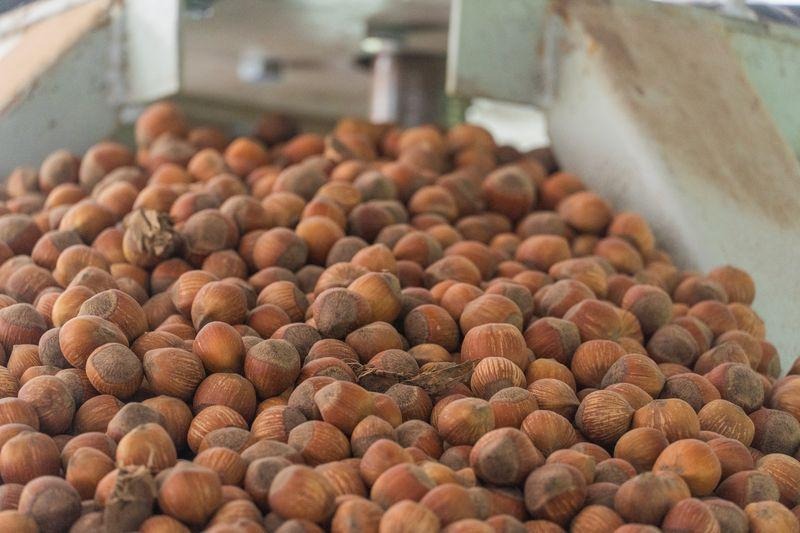
Through the FAO ENPARD programme, funded by the EU and Sweden, Georgia hazelnut producers completed food safety training and received matching grants to purchase hazelnut dryers, protecting farmers’ harvests and reducing food loss. © FAO / Guram Saqvarelidze
Every step matters
In Shete’s experience, Kakhetian hazelnuts command a premium. The Quality comes down to consistently following food safety steps and having access to proper equipment, such as a dryer.
“There is a lot to it,” Shete says. “First, the treatments. Then getting the harvest as fast as you can. Then the drying and finally storing with the right conditions.”
Without these steps, hazelnuts can become low-value, unmarketable, or lost completely. On the other hand, hazelnuts provide a huge opportunity for Georgian farmers.
“Few crops in agriculture hold steady,” he says. “Hazelnuts are the ones that keep their price and never generate financial challenges, if you look after them properly.”
Cutting post-harvest loss is not a single fix but a sequence of steps. The dryer is an important part, but food safety practices need to follow the full value chain. With the right food safety training and equipment, food loss is avoidable.
As the country’s exports grow, so does the volume at risk. But as Georgian gold, hazelnuts rewards are worth the effort.
About ENPARD
The EU supports rural development in Georgia through its ENPARD Programme. Aiming to reduce rural poverty, ENPARD has been implemented since 2013. The Programme started by supporting the development of the national agricultural potential. Subsequently, it concentrated on creating economic opportunities for rural populations in Georgia. Since 2021, the Programme has been working on improving food safety in the country, with additional support from Sweden, and FAO and the Czech Development Agency as the main implementers of this food safety component under ENPARD IV.
This article has been produced with the assistance of the European Union. Its contents are the sole responsibility of FAO and do not necessarily reflect the views of the European Union.